About
Board of Representatives
The Board of Representatives is elected during the annual conference. Any Association member is welcome to nominate themselves for the Board of Representatives. Please see the Constitution for more information.
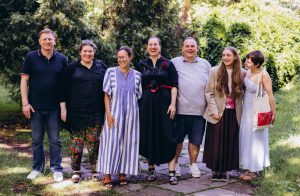
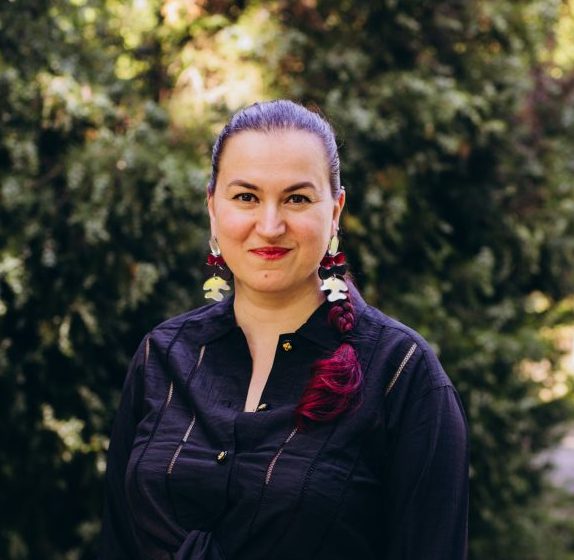
Tereza Hendl
Board Member, Spokesperson and Head of the Conference Committee
She is a philosopher working on issues of global health justice (University of Augsburg). Her research examines concerns of oppression, refusal, justice, and solidarity, as well as the ethics and epistemology of health technologies and interventions, and East–West hierarchies of knowledge. Some of her recent work explores European East–West inequalities and their effects on health and well-being, also considering the impacts of Russian and German imperialism on directly affected populations. For her innovative research contributions, she has received multiple honors, including the 2025 Charles Mills Prize from the Society for Applied Philosophy, the 2025 Bernard Brodie Prize from Contemporary Security, the 2024 Best Article Prize from the American Association for Ukrainian Studies, and a 2024 Honorable Mention in the Heldt Prize for the best article in Slavic, East European, and Eurasian women’s and gender studies, awarded by the Association for Women in Slavic Studies (AWSS). She was awarded the Visegrad Scholarship at the Open Society Archives and was a Visiting Scholar at the Lviv Center for Urban History, the University of Warsaw Center for Bioethics and Biolaw, the Caroline Miles Scholar at the University of Oxford, the Brocher Foundation, the Australian National University, and the Hastings Center in the US. Tereza Hendl is a member of the Independent Resource Group for Global Health Justice (IRG-GHJ), founder of the Central and Eastern European Feminist Research Network, and one of the founders of the RUTA Association for Central, South-Eastern, and Eastern European, Baltic, Caucasus, Central and Northern Asian Studies in Global Conversation—initiatives that amplify and (re)connect marginalized knowledges and contribute to epistemic reparations.

Alexis Scott
Board Member and Head of the Communications Committee
PhD student in Political Science at McGill University whose research focuses on Central Asia, grassroots human rights frameworks, decolonial thought, and the legacies of Russian imperialism in the region and beyond. Born in Bishkek and raised in Canada, Alexis is committed to strengthening cross-regional solidarities with other communities engaged in anti-colonial struggles and to fostering open dialogue about inequalities within the RUTA region(s) themselves. She is particularly interested in supporting platforms that amplify diverse voices and encourage critical conversations about linguistic, racial, economic, and epistemic hierarchies on global and regional scales.

Gražina Bielousova
Board Member and Head of the Fundraising Committee
She is a sociologist working at the intersections of race, religion, and gender in Eastern Europe. Her research interests also span decolonial and postcolonial theory and its application in the region as well as state-religion relations.
After completing her PhD at Duke University (2022) and teaching for a couple of years at UCL, Gražina made the choice to return to her native Lithuania, where she lives now. Currently, Gražina is an assistant professor of sociology at Vytautas Magnus University and a senior lecturer in Vilnius University. She also regularly comments on social and political matters in various outlets. Alongside her involvement with RUTA, Gražina is also the president of the Lithuanian Society for Religious Studies.
When not teaching or writing, she can be found drinking copious amounts of coffee in the company of her cat.

Martin-Oleksandr Kisly
Board Member and Executive Director
He is a Head of the Crimean Studies Center at the National University of Kyiv-Mohyla Academy. Born in Simferopol, Crimea, he specializes in the history of Crimea and the Crimean Tatars, with a particular focus on the Soviet and post-Soviet periods. In 2021, he defended his PhD dissertation, “The Return of the Crimean Tatars to Their Homeland, 1956–1989.” His broader research interests encompass oral history, memory, trauma, identity, migration, and colonialism.
Currently a fellow with the KIU Competence Network, his previous affiliations include fellowships at the Virtual Ukraine Institute for Advanced Study (2023–2024), the Indiana University Nonresidential Scholars Program (2023–2024), and the Institute for Human Sciences (2022).
Alongside his research, Martin is in the History Department at the Kyiv-Mohyla Academy and serves as an expert on the Council for Cognitive De-Occupation under the Mission of the President of Ukraine in the Autonomous Republic of Crimea. one of the founders of the RUTA Association for Central, South-Eastern, and Eastern European, Baltic, Caucasus, Central and Northern Asian Studies in Global Conversation.

Viktoriia Grivina
Board Member and Head of the initiatives Committee
She is a writer and social anthropologist from Kharkiv, Ukraine. She has recently received her PhD degree at the University of St Andrews (UK). Her thesis, Apocalyptic Unlearning: Vulnerable Legacies and Cultural Reimaginings in Kharkiv, Ukraine (2022-2024), was awarded the 2025 David Riches Medal for postgraduate research in social anthropology. Viktoriia holds a Master’s degree in linguistics of Kharkiv National University, and MA in Cultural Studies via Erasmus Mundus Master’s Scholarship (at Tübingen, Bergamo and St Andrews universities). In 2020-21, she was an early career researcher at “(Un)Archving (Post)Industry” Project at Lviv Centre for Urban History, digitizing photographic legacy of Donetsk and Luhansk regions. She is the author of an essay collection, Kharkiv, A War City (Ibidem, 2025), and a co-author of the volume, Kharkiv is a Dream: Public Art and Activism 2013–2023 (Ibidem, 2025). In 2024, she founded the Quiet Centre residency for artists and writers in Kharkiv. Together with Dr Jeffrey Murer at the Centre for Arts and Politics, she hosted a series of talks with the residents, dedicated to their practice of art during war. Viktoriia is based in Kharkiv.
Subscribe to Our Newsletter