Gražina Bielousova’s Opening Remarks at the RUTA Annual Conference 2026 opening ceremony
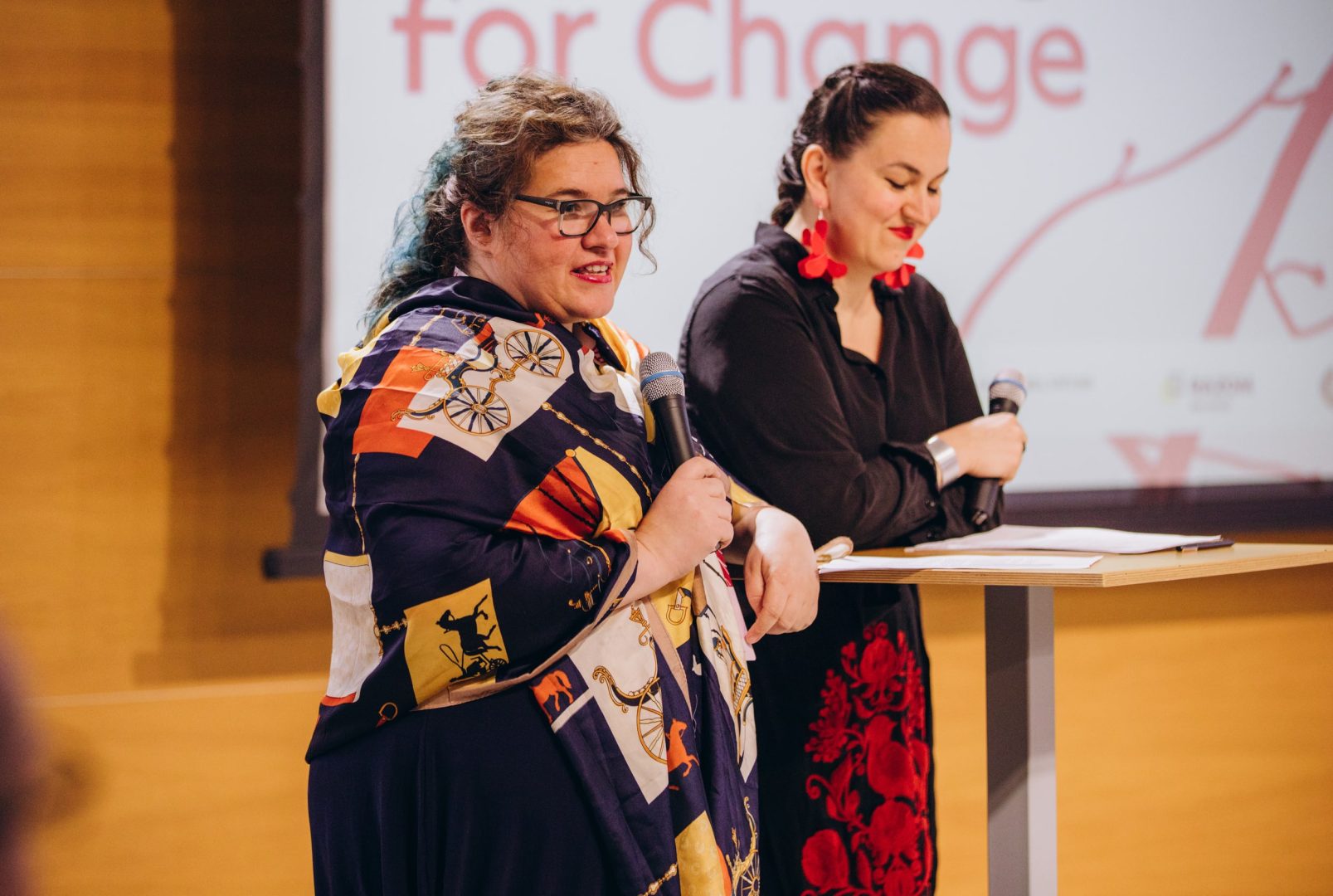
We are meeting here to hold debates on the meaning of rooted knowledges and dialogues, many of which relate to concerns of decoloniality. Decoloniality is a term and a critical approach that has gained major relevance in the RUTA regions especially after the full-scale Russian invasion of Ukraine in 2022. Before that, debates on decoloniality were a smaller trickle of intellectual thought — perhaps even more so in Eastern Europe than in Central Asia — and then, all of a sudden, decoloniality became a mainstream idiom of the regions that have experienced Russian colonial aggression and expansion, both historically and now. It gave us a way to understand ourselves and each other, to experience solidarity by naming the shared colonial trauma and losses, as well as the numerous ways of resistance. At the more grassroots levels, decolonial language and thought also opened the doors for us to find new ways of entering into dialogue with counterparts and partners in the Global South. If postcolonialism names the violence and the losses, decoloniality invites new ways of imagining a future in which life otherwise — outside of the colonial gaze, colonial power, colonial knowledge creation, colonial legal frameworks — becomes possible. Decoloniality is also a way for us to know ourselves on our own terms, to speak ourselves in languages, both figurative and literal, that are our own.
But 2022 was also a year of rupture. Many intellectuals from the Global South and the Global North were quick to endorse the “both sides are at fault” narratives of Russia’s war against Ukraine and chose the Cold War optic of the world, in which Ukraine and the RUTA regions have no agency of their own but are subsumed by the agendas of either Russia or NATO. For those of us who had been learning from the decolonial greats, it was a profound loss of role models and teachers.
This should not have been surprising, as the pushback against using decoloniality as a theory for thinking about our regions has been ongoing. How can we claim the same theory to explain our predicament as those who experienced Western colonialism, the trans-Atlantic slave trade, massacres, genocides, colonial boarding schools, the intentional exploitation of natural resources to the point of ecological disaster, and epistemicide of every imaginable variety? These questions are particularly sharp, since the Soviet Union — or more precisely, the Soviet elites in the Kremlin — had positioned themselves as allies of countries fighting colonial oppression and of racialized minorities in the West. To imagine that Russia, a country whose reputation had been firmly cemented through successful global PR campaigns, the training of professional cadres, and carefully calculated humanitarian aid, could be accused of colonial crimes requires a radical shift of imagination.
Of course, these half-truths and outright lies about the Soviet Union as an anti-imperial and anti-colonial power required the suppression of hard truths at home: racism against Central Asian peoples as well as the indigenous nations of Siberia; the oppression of annexed territories and especially of dissidents, who were branded fascists; genocide — here we can think of the Holodomor in Ukraine and the Asharshylyq of the Kazakh people; the exploitation of natural resources across all the colonized lands; and the deportation of innocent civilians. It required a kind of epistemic engineering on a global scale, one that rendered our regions so entirely agency-less and voiceless, so unable to name and theorize ourselves, that we became virtually invisible to both the Global North and the Global South — with lasting consequences.
Thus the solidarity towards which decolonial theory would point us is not obvious. We are not taught to hear each other’s stories across different contexts, or to listen to the lived experiences and collective memories we carry in our bodies and across generations. Solidarity that would enable us to think with and rethink decolonial approaches with consistency, with care, and in collectively empowering ways requires the kind of hard work that we at RUTA foster, and of which this conference is an example. But this conference also aims much further: to provide a space for the multitude of approaches and frameworks that scholars, artists and social advocates from our regions wish to work with and create from.
When we talk about decoloniality, we also have to acknowledge some home-grown issues that warrant further conversation and critique. First and foremost is that “decoloniality,” especially in its verb form, “to decolonize,” has been used by the oppressive and murderous autocrats of our region, such as Orbán and Putin. They have emptied the word of its liberatory power — which always critiques oppression, power structures and epistemic violence — and have turned it into a tool of further oppression. It does not help that certain scholars, such as Walter Mignolo, who is often considered the parent of anglophone decolonial thought, have themselves endorsed far-right nationalist leaders such as Modi in India, and have not only failed to renounce Russian aggression but have actively critiqued Ukrainian resistance. This comes on top of the fact that the term “decolonization” has gained such colloquial popularity that it has come to mean anything and everything, to the point where we can question whether it has any stable meaning left.
Yet we hold on to the notion of decolonization not in spite of these qualms and problems but, in some ways, because of them. We refuse to give it up, or to give up on it; we treat these problems instead as the ground on which decolonial battles, intellectual and otherwise, are fought. And as the program of this conference demonstrates, these are debates and conversations that we have not alone, but in solidarity with colleagues from every permanently inhabited continent.
Building RUTA in Ukraine means asking pressing questions about how the region should be thought, written, researched and represented. That diversity should be represented at RUTA, which means holding debates also with people who are only beginning to explore it, who know little about colonialism and decolonization. In that spirit, please do bring your scholarly partners, colleagues and friends to RUTA in the coming years, even as non-participants. We would like to grow in diversity, open to supporters and sceptics alike. Holding these conversations in Ukraine, as our chosen mode of thinking the region, is a common basis for all those who come here and commit to epistemic justice in restoring colonization to its central place in how and what we think.
The RUTA Conference 2026 was organized with the support of our partners: Uzhhorod National University and the Department of Archaeology, Ethnology and Cultural Studies; the International Renaissance Foundation; the Heinrich Böll Foundation Ukraine; Razom for Ukraine; Goethe-Institut Ukraine; the Ukrainian Studies Fund; Danyliw Foundation; Danyliw Research Seminar; and the University of Zurich.